Most people don’t know
Many people in the UK love dogs and would be shocked to learn that dogs are still bred, supplied, and used in laboratory experiments. The official language can sound distant: “procedures”, “regulatory testing”, “non-technical summaries”. This site translates those records into plain English.
Dogs are bred in the UK for painful lab experiments.
Their suffering is unnecessary.
Public consent should not be built on public silence. People deserve to know what is still happening, what the government records say, and why breeding dogs for experiments should end.
A “regulated procedure” under UK law is a scientific procedure that may cause pain, suffering, distress or lasting harm at least equivalent to, or higher than, inserting a needle according to good veterinary practice.
Not rare. Not historic. Happening now.
In 2024, official Home Office statistics recorded 2,646 dog experiments in Britain. Most were regulatory tests — not attempts to discover new cures.
Numbers matter, but they are not enough. Behind the figures are dogs who feel fear, pain and stress much like us.
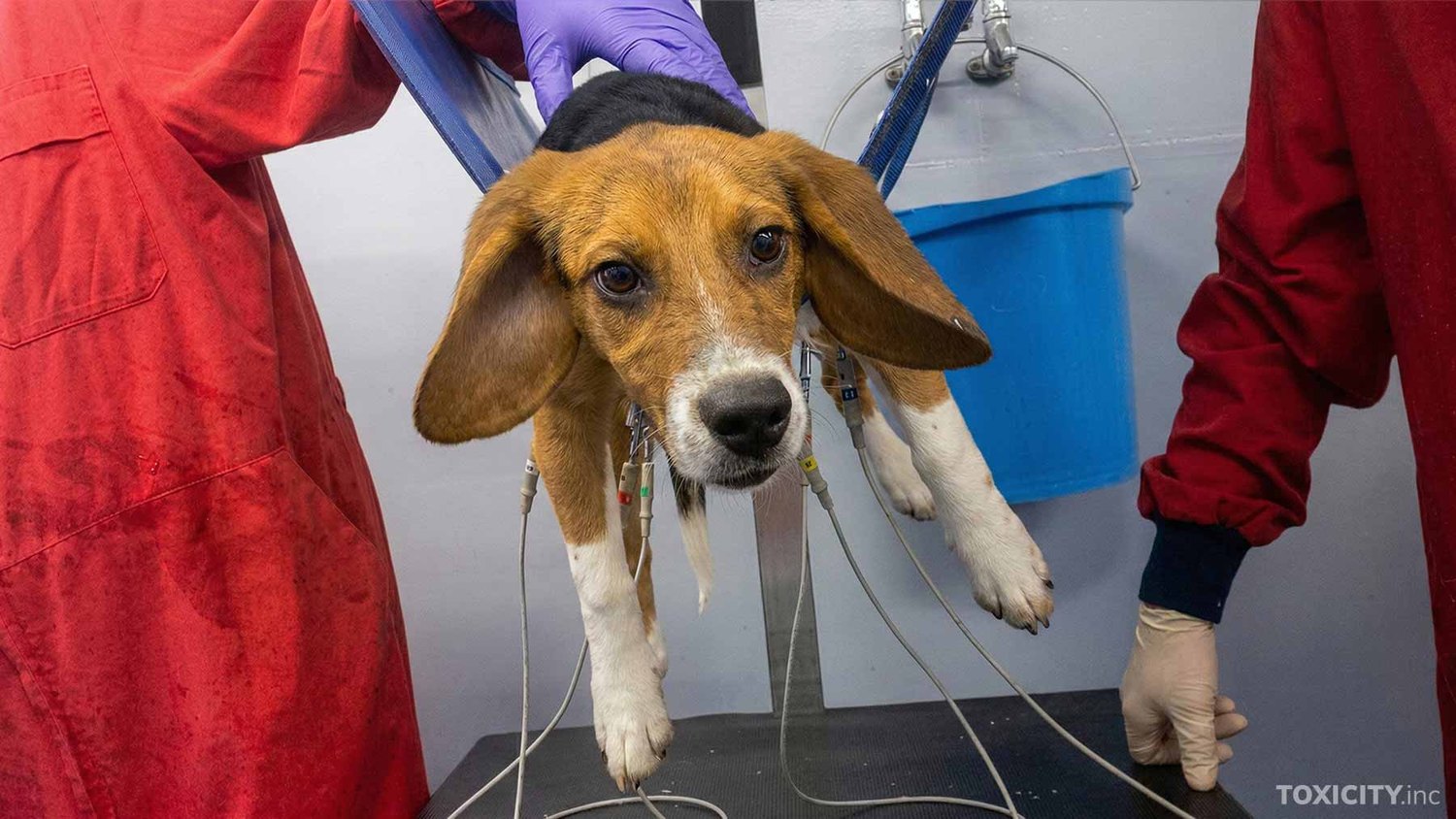
Dogs are not just statistics
Dogs are feeling beings. They feel fear, pain and stress much like us. They may not speak in human words, but veterinary medicine recognises dog pain through behaviour, posture, health signs and changes in mood or activity.
UK animal-sentience law recognises vertebrate animals, including dogs, as sentient beings. Veterinary guidance also treats pain in dogs as real, important, and something professionals have a duty to recognise and relieve.
Before we ask what the records say, we should remember who the records are about: living dogs, often beagles, whose bodies and lives are used by the system.
The latest official snapshot
Important: the government records these as “procedures”. On this site we sometimes say “experiments” in plain language, but a procedure count is not the same as the number of individual dogs. A dog may be used in more than one procedure.
There are better ways
The UK government now accepts that animal use should be replaced wherever possible, and modern methods such as human cell models, organ-on-chip systems, AI tools and 3D tissue models are already part of the conversation.
But a strategy without enough urgency still leaves dogs waiting. Alternatives should be used wherever they exist, and the government should be pushed harder where they do not.
This is happening under the current system
The UK system does not simply study dogs after they have died naturally. It allows living dogs to be bred, supplied, housed, dosed, sampled, monitored, reused in some cases, and killed in others, depending on the licence and project.
Government non-technical summaries describe dog and beagle projects involving dosing by mouth, injection, skin application or inhalation, blood and urine sampling, ECG or blood pressure monitoring, possible confinement or single housing for sample collection, surgery in some projects, and killing so tissues can be examined.
That is why the central question is not only whether the law is being followed. It is whether a society that calls dogs companions should continue breeding gentle, trusting animals for a system that can legally expose them to suffering and death.
What this site explains
This site follows a simple journey: first what happens to dogs, then who signs it off, then why better methods and better choices matter.
What happens to dogs
Examples from official non-technical summaries: dosing, sampling, monitoring, killing, re-use or rehoming depending on the project. A year-by-year timeline of real dog experiments.
Who signs this off?
The Animals in Science Regulation Unit (ASRU), Animals (Scientific Procedures) Act (ASPA) and the licensing system.
What are the alternatives?
Human-relevant methods already exist. The government accepts the direction of travel, but is not moving fast enough.
Why breeding should end
The ethical case for ending the breeding of dogs for experiments.
Support Camp Beagle
Learn about the frontline campaign outside MBR Acres and how to get involved.
Q&A
Calm answers to common questions about dogs, regulation, alternatives and evidence.
Support Camp Beagle
Camp Beagle is leading the frontline campaign outside MBR Acres. Bred For Labs is an independent evidence-led initiative created to share information by making official records easier to understand and share.
If this website moves you, please also visit Camp Beagle directly. They provide ways to visit, volunteer, write to your MP, use campaign materials, sign petitions and donate.
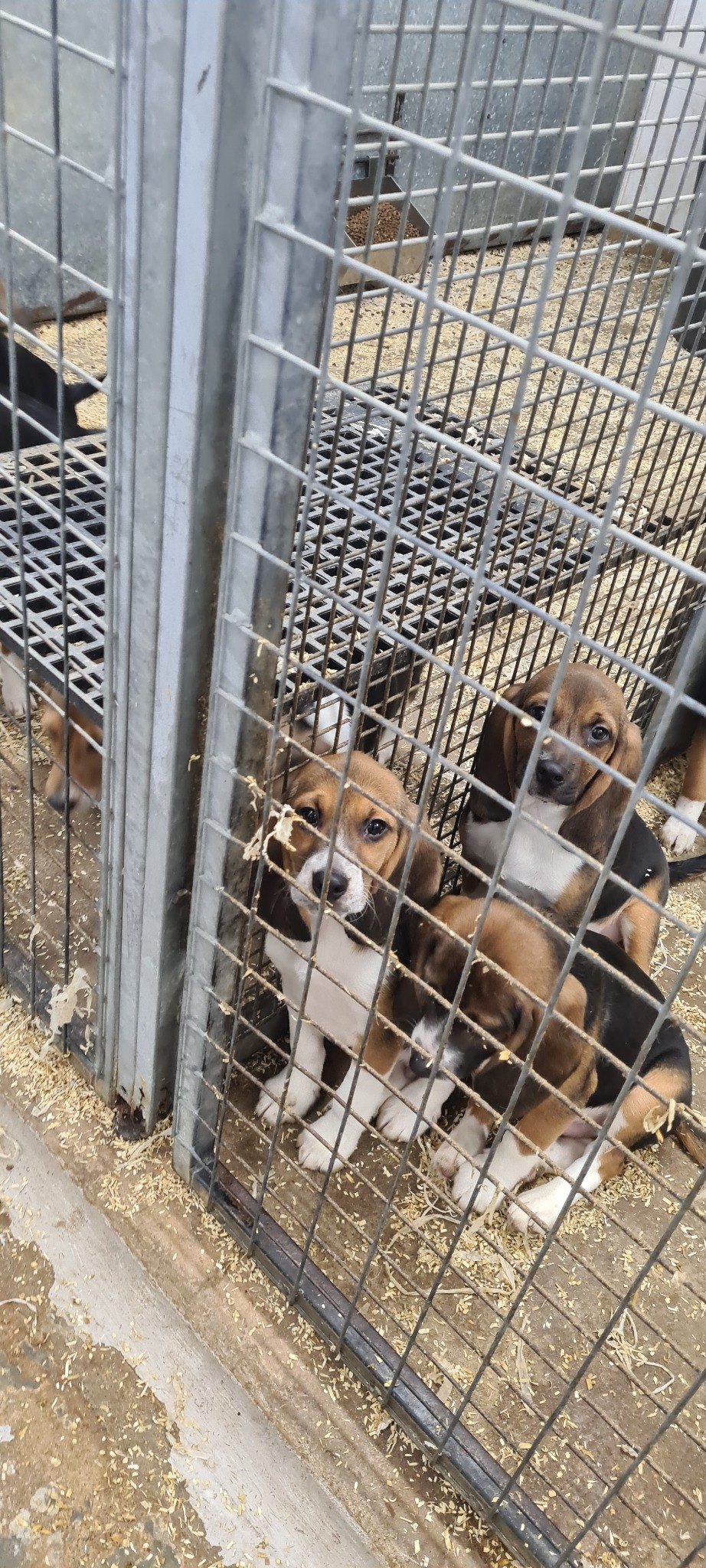
A message meant just for you
Regulation does not mean protection from suffering. Regulation can permit suffering, and sometimes the rules aren't even followed.
This project aims to speak clearly without overstating the evidence. The suffering of dogs is serious enough without exaggeration.